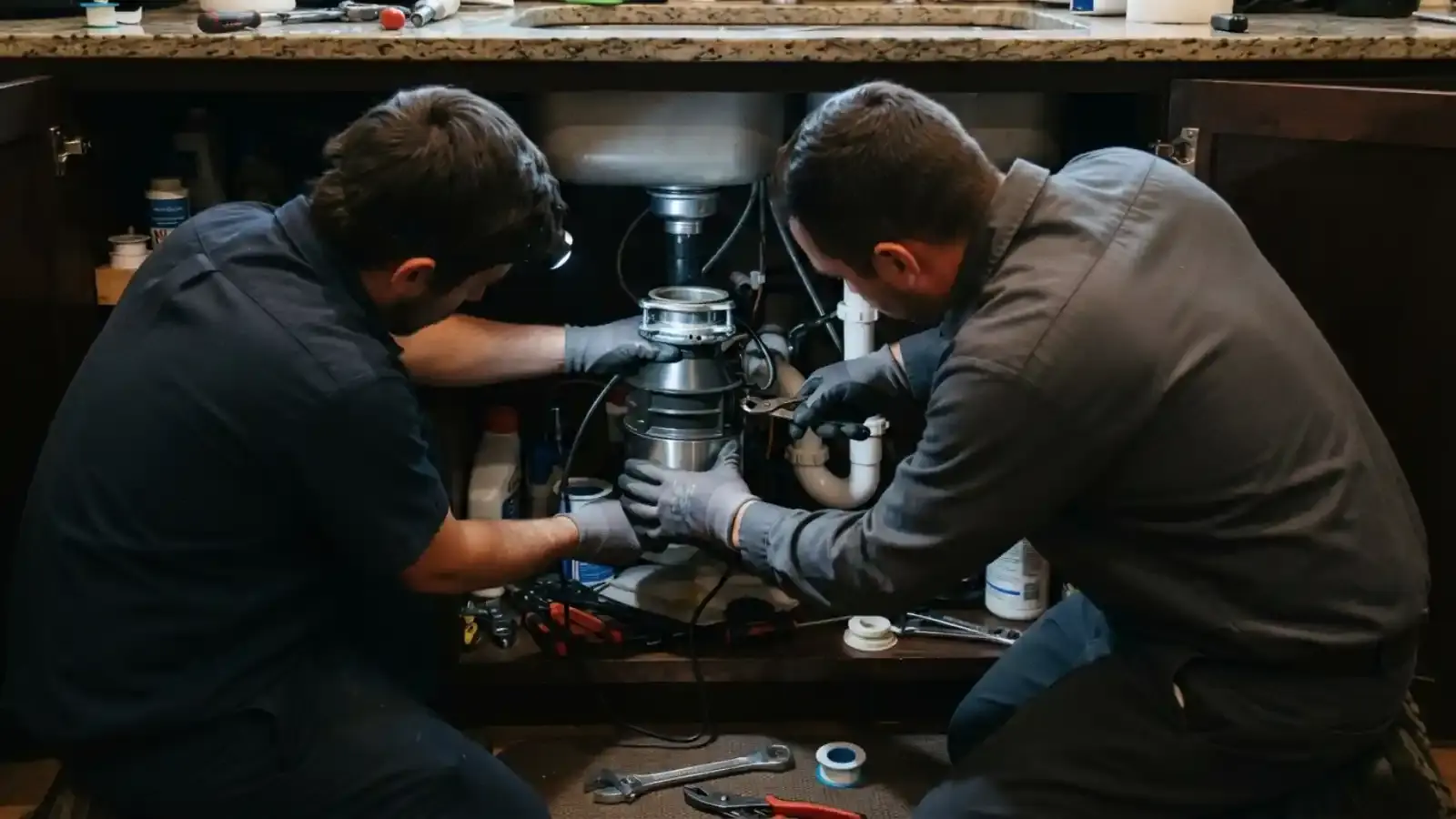
Safe reset: the DIY steps that work
A jam is the most common disposal call, and a jam is usually a two-minute fix. Do these in order and do not skip the first step.
Kill the power
Turn off the wall switch, then unplug the disposal under the sink or flip its breaker. A disposal can start without warning, and that is the most common way hands get hurt.
Use the hex key
Most units have a hex socket (usually a quarter inch) in the center of the bottom. Insert the wrench that came with it, and work it back and forth until the motor spins freely.
Remove the jam from above
Use tongs or pliers, never fingers, to take out the spoon, bone or fruit pit. A flashlight helps you see it.
Press the reset
A red button on the bottom pops out when the motor overheats. Wait a few minutes, press it in, restore the power and run cold water as you test.
If the unit hums but will not turn after the hex key, or trips again immediately, stop. The motor or bearings are likely finished.
Water on the cabinet floor: a leaking or backed-up disposal is urgent
A leak at the top flange means the mounting seal or putty has failed. A leak from the side usually points to the dishwasher hose or the drain elbow. A leak from the bottom or through the reset button is a cracked housing or failed seal, and that is a replacement, not a repair.
When the sink backs up and the disposal will not clear it, the blockage is past the unit. Double-bowl kitchen sinks share a trap, so both sides rise together. We clear that with a small drain machine, and it is a separate job from the disposal.
Chloramines, hard water and what they do to a disposal
ACWD water in Union City averages about 8 grains of hardness per gallon, so the inside of a disposal, the drain below it and the dishwasher line all gather mineral scale over time. Scale roughens surfaces, and roughness catches grease and food, which is why a disposal slows down before it quits.
Run cold water for 15 seconds after you grind and run a bag of ice or citrus peel through it occasionally. Check the ACWD water quality report if you want your own neighborhood's numbers.
Disposal installs follow the California Plumbing Code, which is based on the Uniform Plumbing Code (UPC) for trap, drain and dishwasher connections. If a new unit drains slowly, ask whether the connection layout meets that standard, because a high loop or a poor trap is a common cause.
Source type: Alameda County Water District water quality report
What the sound and the symptom mean
Humming, no spin
The flywheel is jammed or the motor's start capacitor has failed. Try the hex key first, and if the hum continues, plan on replacement.
Silent, no hum
The reset has tripped, the outlet is dead, or the switch has failed. Check those before assuming the motor is gone.
Grinding or rattling
A spoon, bottle cap or glass shard is in the chamber, or the grinding plate is worn. Shut it off and look.
Slow drain with the unit running
A partial clog downstream or a fouled baffle. Heavy grease buildup in the trap is the common cause.
Dishwasher drains into the sink
The disposal's dishwasher inlet is plugged, or the dishwasher drain hose is not looped high enough.
Disposal dead and the sink full?
Describe the sink and the sound and we will help you decide what can wait until morning.
Choosing a replacement disposal and what drives the cost
Horsepower is the number most shoppers look at, and it is a good place to start.
What to grind and what to keep out
Fine to grind
- Soft food scraps in small pieces
- Small amounts of cooked vegetables
- Citrus peels in small amounts, for smell
- Ice cubes occasionally, to knock off residue
Keep out of the disposal
- Grease, oil and fat, which harden in the trap
- Coffee grounds, which pack together
- Pasta, rice and bread, which swell with water
- Bones, fruit pits and corn husks
- Potato peels and celery, which tangle on the impellers
The same advice protects the line past the disposal, and if grease already built up, hydro jetting clears it from the pipe walls.
Dishwasher connection and a new install
Knock out the plug
A new disposal has a small plastic plug in its dishwasher inlet. If the dishwasher drains through the disposal, the plug must be knocked out and removed. Many first-time installers forget and cause a backup.
Loop or air gap
The dishwasher hose must rise above the drain connection (a high loop) or run through an air gap. This prevents sink water from flowing back into the dishwasher.
Electrical
A disposal needs a switched outlet or a hardwired connection. New circuits are for a licensed electrician, and we will tell you if that is needed.
A first disposal
If the kitchen never had one, we install the mount, trap and dishwasher connection, and you supply the electrical. Our plumbing installation page covers other new fixtures.
Disposal questions people ask
Yes. The line is answered 24/7, including nights, weekends and holidays. A disposal that is leaking, backed up or will not stop running is treated as an emergency, and the phone call alone often helps you stop the damage.
The impellers are jammed or the motor cannot turn. Turn the power off, use the hex key on the bottom to free it, then press the reset. If it keeps humming, the motor is likely burned out.
No. Even a switched-off unit can start if it is wired in or plugged in. Always unplug it or trip the breaker and use tongs.
A third or half horsepower works for small households. A three-quarter horsepower unit is the better choice for families, and one horsepower suits heavy use or a dishwasher that drains through it.
Check the disposal's dishwasher inlet for a plug or a food jam, and check the hose for a high loop. If both are fine, the drain past the disposal is partly blocked.