An emergency plumber for a city built from five towns
Fremont was formed in 1956 when five separate townships joined, and plumbing problems here still follow those old town lines. A pinhole leak in a 1960s Centerville tract looks nothing like a clogged drain in a Niles cottage or a backup on a Mission San Jose hillside. Union City borders Fremont, so our base is about 4 to 5 miles from central Fremont (an estimate, since traffic changes it).
Emergency dispatch is available around the clock, including nights, weekends and holidays. We do not promise an arrival time on the phone, but we will tell you exactly what to shut off while we get on the road.
One fact helps you know who to call first. Fremont gets its water from Alameda County Water District and its sewer service from Union Sanitary District, the same two agencies that serve Union City. A leak on the street side of your meter belongs to the water district, while everything from the meter into your house is yours.
What each Fremont district means for your pipes
The city's own Housing Element says about 70% of Fremont's housing was built between 1960 and 1980. That single fact explains most of the calls: original water heaters on their second or third tank, aging supply lines, and drains that have carried decades of use.
Centerville
The central core mixes older cottages with 1960s and 1970s tracts. Original shutoff valves here often seize, so test yours once a year before an emergency. A heater past ten years old deserves a look before it fails at 2 a.m.
Niles
Niles sits at the mouth of Niles Canyon and holds some of the oldest housing in Fremont, about 3 miles from our base. USD says older homes may have no sewer cleanout, and the water district says homes built before 1960 likely have galvanized service lines. Tell us the age of the house when you call.
Irvington
An early settlement area, so streets mix older lots with later infill. Mixed ages mean mixed pipe, and galvanized steel, copper and plastic can meet in one house after past repairs. Those transition points are where slow leaks like to hide.
Warm Springs
The southern edge of the city, with the Warm Springs and South Fremont BART station and the newest growth. Newer stock tends to fail at fittings, water heaters and fixtures rather than old steel. It is about 10 miles from Union City (an estimate), so tell us the cross streets early.
Mission San Jose
Foothill lots at the base of Mission Peak, roughly 7 to 8 miles from our base. Slope matters for drains, and the Hayward Fault passes through this area. Tell us if your sewer cleanout sits below the street level, because that changes how a backup behaves.
Water where it should not be?
Shut off the house valve and call the 24/7 line. Tell us your district or the nearest cross streets, and we will plan the visit from there.
Living on the Hayward Fault: what it means for water heaters and shutoffs
The USGS field guide to the Hayward Fault notes that it crosses through Fremont's Central Park, and the 1868 magnitude 6.8 quake ruptured the ground from Warm Springs north to San Leandro. That history is why California requires water heaters to be braced, anchored or strapped against falling or shifting (Health and Safety Code 19211). After any noticeable shaking, check that the straps are still tight and the supply connectors are not weeping.
A heater that tipped even slightly can strain its pipes and gas connection. If you see water at the base or smell gas after a quake, shut the water off, leave the building if you smell gas, and call 911 before you call us.
Work done in Fremont follows the California Plumbing Code, which is based on the Uniform Plumbing Code (UPC), the same code used across California, and the city has its own permit process for items such as water heater replacement. Ask your plumber which permits apply before the work starts.
Source type: USGS Open-File Report 2008-1135, USGS 1868 earthquake summary and California Health and Safety Code 19211
Before we arrive: four steps while you wait
These steps limit damage in the first few minutes. None of them need tools, and all of them can be undone later.
Shut off the main valve
Find the house valve and turn it clockwise until it stops. If it will not move, do not force it, and say so when you call so we can bring the right parts.
Kill power near the water
If water is near outlets, an appliance or the panel, switch off that circuit at the breaker. Stay out of standing water if the floor is wet near anything electrical.
Clear the area
Move rugs, boxes and furniture off the wet floor and keep kids and pets away. Open a drain or put a bucket under a drip to buy time.
Call the 24/7 line
Give us your address, the nearest cross streets and what you see. We will confirm the next step and keep you on the line if the leak is getting worse.
Which pipe is whose in Fremont
Fremont and Union City share the same two utilities, so one chart works for both. Knowing which side of the line a problem sits on saves a wasted call.
| Where the problem is | Who is responsible | What to do first |
|---|---|---|
| Leak on the street side of the meter | Alameda County Water District | Call ACWD Operations at (510) 668-6500 |
| Leak between the meter and your house | You | Shut off the house valve and call us |
| Sewer backup inside the house | USD for the public main, you for the lateral | Call USD's 24-hour line at (510) 477-7500 to check the main |
| Water heater leaking or dead | You | Close the cold supply to the heater and call us |
| Gas smell | Gas utility | Leave the building, call 911, then the gas utility |
USD checks the public main for free. If the main is clear, the blockage is probably in your lateral, which you own all the way to the main, including under the sidewalk and street.
Water heater failed? Fremont has a faster permit path
Fremont offers an express residential plumbing permit, issued online through the city's Citizen Access portal, that covers repair, alteration or replacement of an existing water heater. Tank, tankless and heat pump units are all included. The express permit does not cover sewer line relocation or new sewer lines for added demand.
That helps when a heater dies on a weekend. Whoever does the job should handle the permit, so ask for the permit number afterward. Our water heater repair visits start with a leak and age check, because a tank that is weeping at the seam is usually past saving.
Niles Canyon, Alameda Creek and the landmarks we use to find you
The Alameda Creek flood control channel begins near the mouth of Niles Canyon and runs about 12 miles to the Bay, with levees on both sides. Fremont's nearest NOAA station normals show about 15.94 inches of rain a year and only about 2.8 days a year at or below freezing. So a burst pipe here is almost always age, corrosion or pressure, not a cold snap.
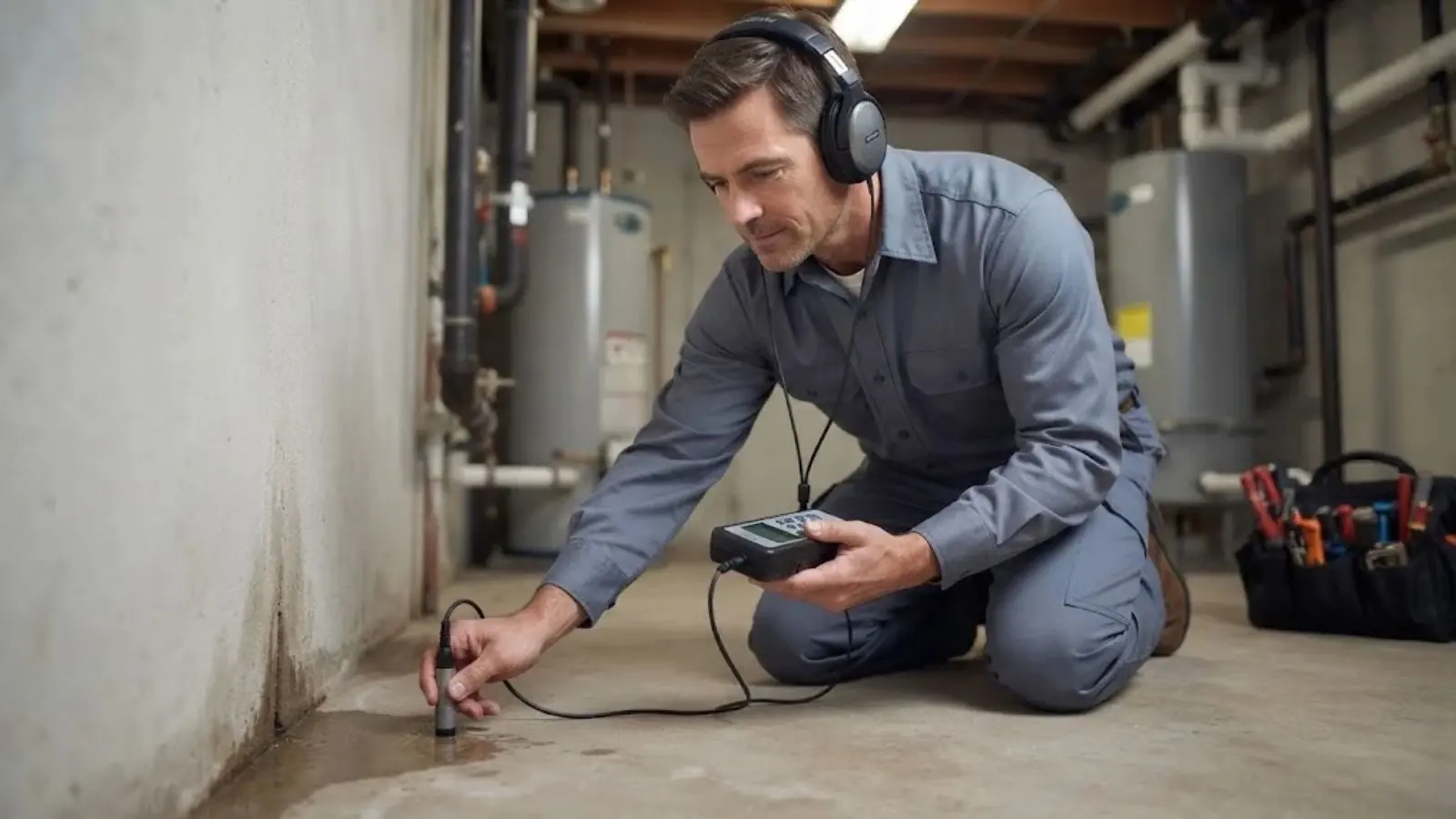
When you call, name the nearest landmark. Washington Hospital on Mowry Avenue, Fremont BART on BART Way and Warm Springs BART all help us place you fast. If you live in a multi-unit building near one of them, ask your manager where the building shutoff is before water reaches the neighbors below. For a hidden leak, our leak detection work uses acoustic and thermal tools so we open as little wall as possible.
If a drain backs up on a Fremont hillside lot
Sewer backups are the call that makes slope matter. USD notes that a sewer backflow device may be prudent in hilly areas, which includes the foothills near Mission San Jose.
- Stop the water. Do not run sinks, showers or the washer once a toilet or tub starts to gurgle.
- Check your cleanout. A cap just outside the house or behind the sidewalk is the usual spot. Older homes may have none.
- Call USD first. Their 24-hour line checks the public main for free, and that tells us whether the blockage is yours.
- Ask about a backflow device. USD does not supply one, so a plumber has to size and install it.
- Plan the permit. Any lateral work needs a USD repair permit, and digging calls for 811 at least two working days ahead.
Our drain cleaning crew starts with a camera when the cause is unclear, and sewer line repair follows once we know where the lateral has failed.
Nearby ZIP codes and who else calls us
Customers in 94560 near Newark and 94587 in Union City sit at the edge of the same service map, and water heater repair and leak detection are the most common reasons they call. We also take calls from Hayward, Newark and Castro Valley, and our service area page shows how the whole region fits together.
Fremont emergency plumbing questions
Yes. We serve 94536, 94538, 94539 and 94555. That includes 94536, which covers Fremont BART and the Niles Canyon Railway station on Mission Boulevard, 94538 around Washington Hospital on Mowry Avenue, and 94539 down at the Warm Springs/South Fremont BART station. The fourth, 94555, is the Fremont ZIP whose edge touches Union City, so it sits right next to our Union City service area.
Yes. The line is answered 24/7, including nights, weekends and holidays. We do not promise an arrival time, but we will talk you through shutting off the water and clearing the area while we plan the trip from Union City.
Yes. Alameda County Water District supplies water to both, and Union Sanitary District handles sewer for both. That means the street-side meter rule and the lateral rule work the same in both cities, so the table above applies wherever you live.
Fremont lists an express residential plumbing permit, issued online, for repair, alteration or replacement of an existing water heater, including tank, tankless and heat pump units. Ask whoever installs yours to pull it and give you the number. If you move the heater or change the sewer, check with the city first.
It is worth asking. USD says a backflow prevention device may be prudent in hilly areas, and it does not supply one. If a drain has backed up before, have a plumber look at whether a device fits your lateral and cleanout setup.
We are in Union City, about 4 to 5 miles from central Fremont, about 3 miles from Niles, 7 to 8 miles from Mission San Jose and about 10 miles from Warm Springs. These are estimates and traffic changes them, so tell us your cross streets when you call.
Original water heaters, seized shutoff valves, corroded supply lines and aging drain connections are the usual suspects. Homes before 1960 may also have galvanized service lines, per the water district. Leak detection is the right first step when you suspect a slow leak behind a wall.