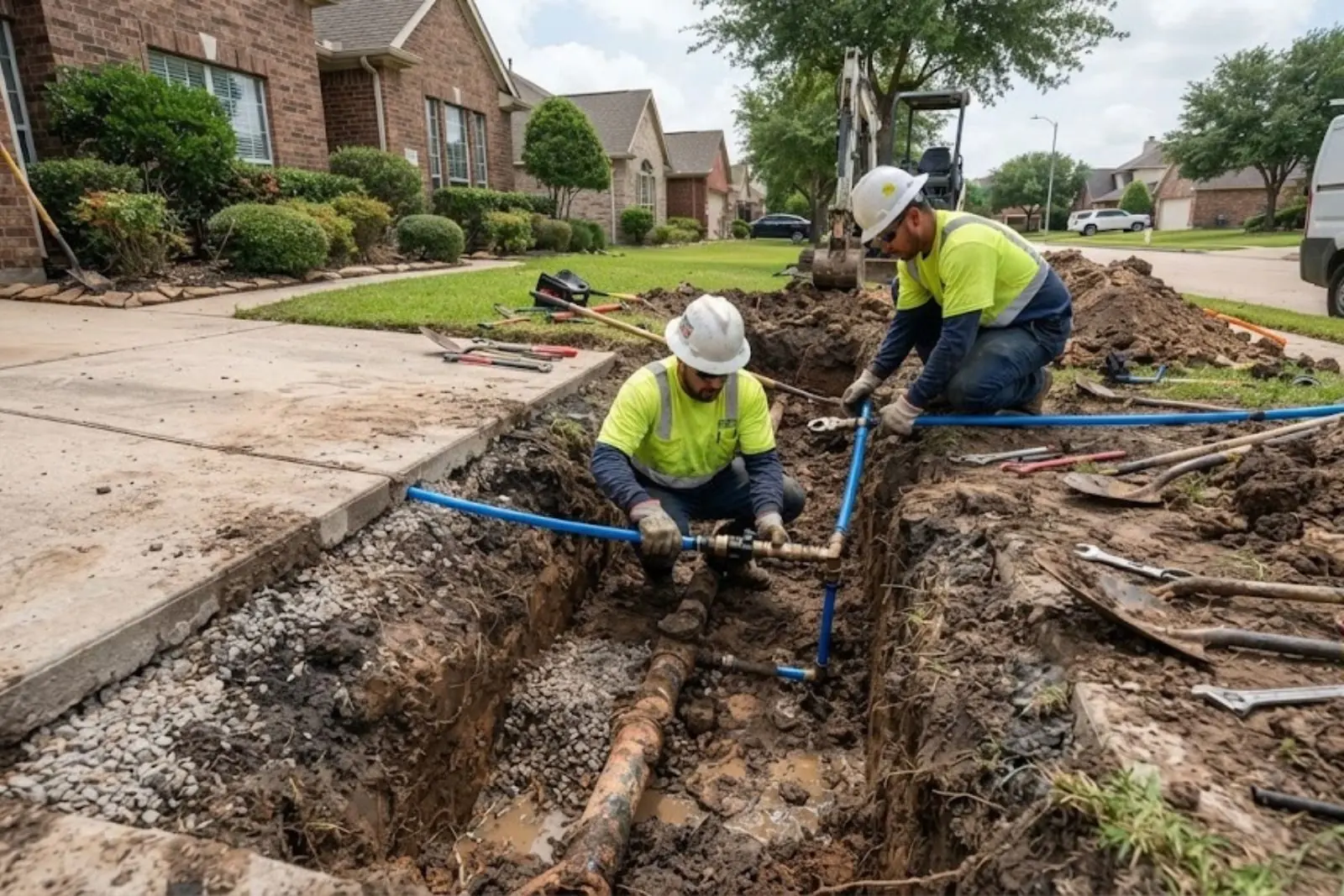
Whose Pipe Is It? Start at the Meter
Water bubbling up in the yard or the street is urgent. Call the 24/7 line, close your main house valve (ACWD says clockwise), and take photos of the wet area. Same-day response is the aim for an active leak that is flooding a yard or undermining a driveway.
The water meter marks the boundary. ACWD is responsible for the pipe on the street side. You are responsible from the meter inward, which includes the line to the house and any shutoffs on your side.
Who Handles What
| Where the problem is | Who is responsible | What to do |
|---|---|---|
| Street side of the meter | ACWD | Call ACWD Operations at (510) 668-6500. |
| Meter to the house | Owner | We locate, repair or replace the line. |
| Inside the house, after the main valve | Owner | See leak detection for hidden leaks. |
| Backflow assembly at the meter | Owner, tested annually | A certified tester must test it each year. |
If you are not sure, we can check pressure and trace the line to tell you which side the problem is on before anyone digs.
Galvanized Lines in Older Homes
ACWD says that if your home was built before 1960, your service line is likely galvanized steel, and galvanized lines tend to leak after 40 to 50 years. Signs include low pressure, a patch of unusually green grass, and stains. If your home fits that age, a leak is not a surprise, and the question becomes whether to patch or replace the whole line.
Source type: ACWD galvanized service line leak page
Signs the Service Line Is Failing
Low pressure at every tap
Corrosion buildup inside galvanized steel narrows the bore until flow drops.
Green or soggy patch
A strip of lush grass or wet ground between the meter and the house, with no sprinkler running.
Meter turns with all fixtures off
Run the overnight shut-off test, covered on our leak detection page.
Rusty or discolored water
Brown water after a period of no use points to steel rusting inside.
Sinkholes or sunken pavement
Water that escapes under concrete can wash out the soil beneath it.
Sound of water in the yard
A hiss near the meter or along the pipe path when everything is off.
Trenching or Trenchless Replacement
Both put a new line in the ground. The difference is how much of your yard gets opened.
Open trench
- Direct access to the old line
- Best for short runs or shallow lines
- Reliable and widely used
- Lawn, paving or landscaping must be restored
Trenchless
- Small entry and exit pits only
- Keeps driveways and gardens mostly intact
- Not suited to every soil or layout
- Cost depends on length, depth and obstacles
We tell you which fits your yard after we see where the line runs. Dig only after calling 811. It is free, legally required in California, and needs at least two working days' notice.
Not sure it is your side of the meter?
Call and we will help you work it out. If the leak is on ACWD's side we will say so, and we will not send you out to dig.
Repair or Replace: How We Decide
Locate and expose
We trace the line, mark it, and open the smallest area that reaches the leak.
Inspect the pipe
If the pipe around the leak is thin, pitted or choked with rust, we show you.
Weigh the options
A fitting failure on sound pipe can be repaired. A corroded line is usually worth replacing end to end.
Plan the work
Depth, length, utilities, trees and surface all affect the choice between a trench and trenchless.
Permits and pressure test
Replacing concealed pipe is new work under the Union City permit rules, so we plan for it, and we test the new line before backfilling.
Backflow Testing and the Annual Test
A backflow preventer keeps water from your property from flowing back into the public supply. ACWD says an installed device must be tested by a certified tester at least once a year, and the district may ask a customer to install a device at the meter after a survey.
ACWD keeps a list of approved local testers. We can test, repair or replace an assembly, and you can reach the ACWD backflow office at 510-668-6584 with questions about your account.
Before Any Digging Starts
- Call 811 at least two working days ahead.
- Mark where the meter, main valve and any irrigation lines run.
- Move cars, planters and anything on the path.
- Tell us about past repairs or a known older line.
- Ask us which permits apply, and see the Fremont side of the area on emergency plumber in Fremont if you own property there.
Water Line Questions
Yes. The 24/7 line is answered nights, weekends and holidays. Close the main house valve if water is surfacing, call us, and we will tell you what to photograph and what to avoid while we get a plumber moving.
Yes. ACWD is responsible for pipes on the street side of the meter and the owner is responsible from the meter inward.
ACWD says homes built before 1960 are likely to have galvanized steel service lines. A magnet sticks to galvanized steel but not to copper, and a plumber can confirm.
At least once a year by a certified tester, according to ACWD. ACWD keeps a list of approved testers.
Yes, before digging. It is free and legally required in California, and the notice period is two working days.
Sometimes. Trenchless methods need only small pits, but they do not suit every layout. We look at the line path before suggesting either option.