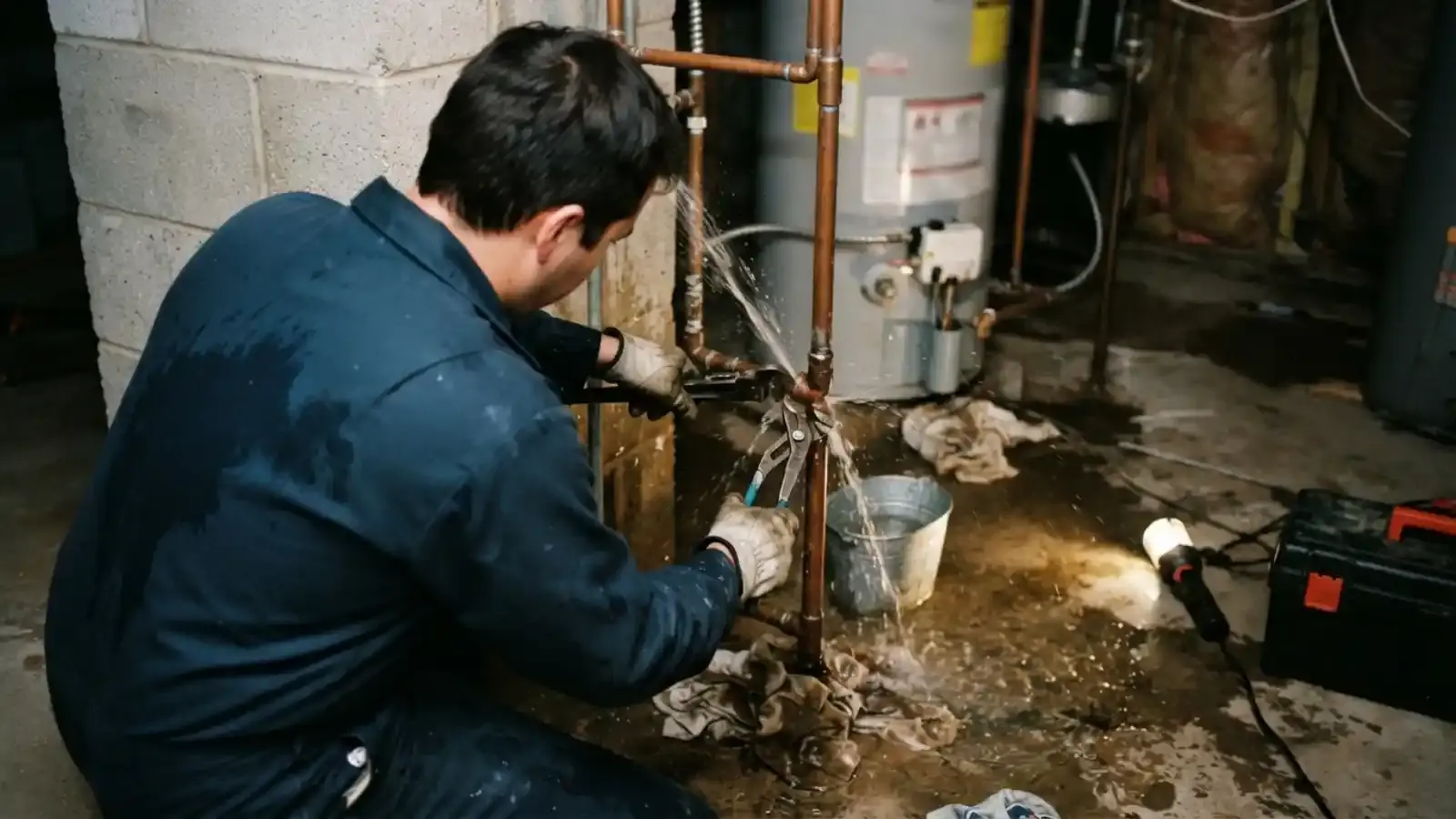
A Pipe Just Burst: Do These Things in Order
Same-day help is the aim for any active burst. These steps limit the damage while the plumber is on the way.
Close the main house valve
ACWD says to turn the house valve clockwise. Know where yours is before you need it, because it may be at the front of the house or in the garage.
Cut power to wet areas
If water is near outlets, appliances or the panel, do not stand in it. Turn off the breaker only if you can reach it dry. Otherwise stay out and call.
Open a low faucet
Draining the lines relieves pressure and reduces what is still in the pipe. Flush a toilet too.
Turn off the water heater
Set the gas to pilot or switch off electric power so the tank is not heating while lines are empty.
Photograph and call
Take photos of the damage and the pipe before cleanup. Then call the 24/7 line for a plumber and ask about next steps.
What Actually Makes Pipes Burst Here
Freezing is rare in this area. NOAA's nearest normals station records about 2.8 days a year at or below 32F, so most local bursts come from other causes.
Corrosion and age
Galvanized steel rusts from the inside. Old copper and steel thin out until a pressure spike or a small bump splits the wall.
High or fluctuating pressure
Pressure that is too high, or a failing pressure regulator, strains joints and fittings. Hammering pipes are a warning.
Failed fittings
Many bursts are a connector, coupling or old compression fitting letting go rather than the pipe itself.
Mechanical damage
A nail through a pipe during remodeling, a shovel in the yard or heavy equipment can crack a line that held for years.
Ground movement and roots
Shifting soil, settling or roots pressing on buried lines can stress joints until they fail.
Water still running?
Call the 24/7 line now, then finish closing valves and clearing the area. We will ask what the pipe looks like and where it is.
Where Your Responsibility Starts
ACWD owns the pipe on the street side of the meter and the owner owns from the meter inward. If the burst is at or before the meter, call ACWD Operations at (510) 668-6500, and if it is after, call us. Knowing that saves time while water is running.
Because freezing is rare here, a burst on a mild night usually points to wear or pressure. Ask us to check the pressure regulator, since a repaired pipe will fail again if the pressure behind it is too high.
Repairs to supply piping follow the California Plumbing Code, which is based on the Uniform Plumbing Code (UPC), so a patch that holds today still has to use approved fittings and materials. Ask the plumber what material they are using at the break and whether any section behind the wall should be replaced.
Source type: ACWD customer FAQ, NOAA 1991 to 2020 Normals
What the Repair Looks Like
We find the failed section, cut out the damaged pipe, and replace it with new pipe and proper fittings. Where the line is old steel or aged copper, we tell you whether the rest of the run is worth keeping. A single patch on pipe that is rotten end to end often leads to a second burst a few feet away.
Repairs that stop leaks do not need a permit under Union City's rules, but replacing a concealed pipe is treated as new work. If the job goes that far, ask the Building Division at 510.675.5313 how the permit applies.
Document the Damage for Your Insurer
Insurance adjusters want proof of what happened and what you did to limit it. A few minutes now saves arguments later.
- Photograph and video the burst, the water, and the damaged rooms before cleanup.
- Note the time you found it and the time you closed the main valve.
- Save the failed pipe section if the plumber can set it aside.
- Keep receipts for emergency repairs, dehumidifiers and any temporary lodging.
- Call your insurer promptly and ask what they need before you remove wet materials.
Ask the plumber to write the cause on the invoice in plain words, such as corrosion or fitting failure. If the burst is one of several, see repiping before the next one happens.
Patch the Burst or Replace the Run?
Repair the section
- Pipe is otherwise sound and not corroded
- One failure with a clear cause
- Lower cost and less opening
- Right for a damaged fitting or a nail hole
Replace a longer run
- Old galvanized or thin copper
- Second leak within a short time
- Higher cost today, fewer calls later
- See water line repair if it is the line from the meter
Burst Pipe Questions
Yes. The line is answered 24/7, including holidays, and a burst is treated as an emergency. Close the main house valve first, then call, and we will help you with next steps while a plumber is on the way.
ACWD says to turn the house valve clockwise. If the valve will not move or keeps leaking, call ACWD Operations at (510) 668-6500 and tell us as well.
Only if you can reach the panel without standing in water. If not, stay out of the area and call. Electrical safety comes before saving belongings.
Rarely. NOAA records about 2.8 days a year at or below 32F at the nearest normals station, so most bursts here come from corrosion, pressure or old fittings.
Many policies cover the water damage but may not cover the failed pipe. Call your insurer, keep photos, and save receipts for emergency repairs.
If the rest of the pipe is in good shape, yes. If it is old galvanized or heavily corroded, ask about replacing a longer section.