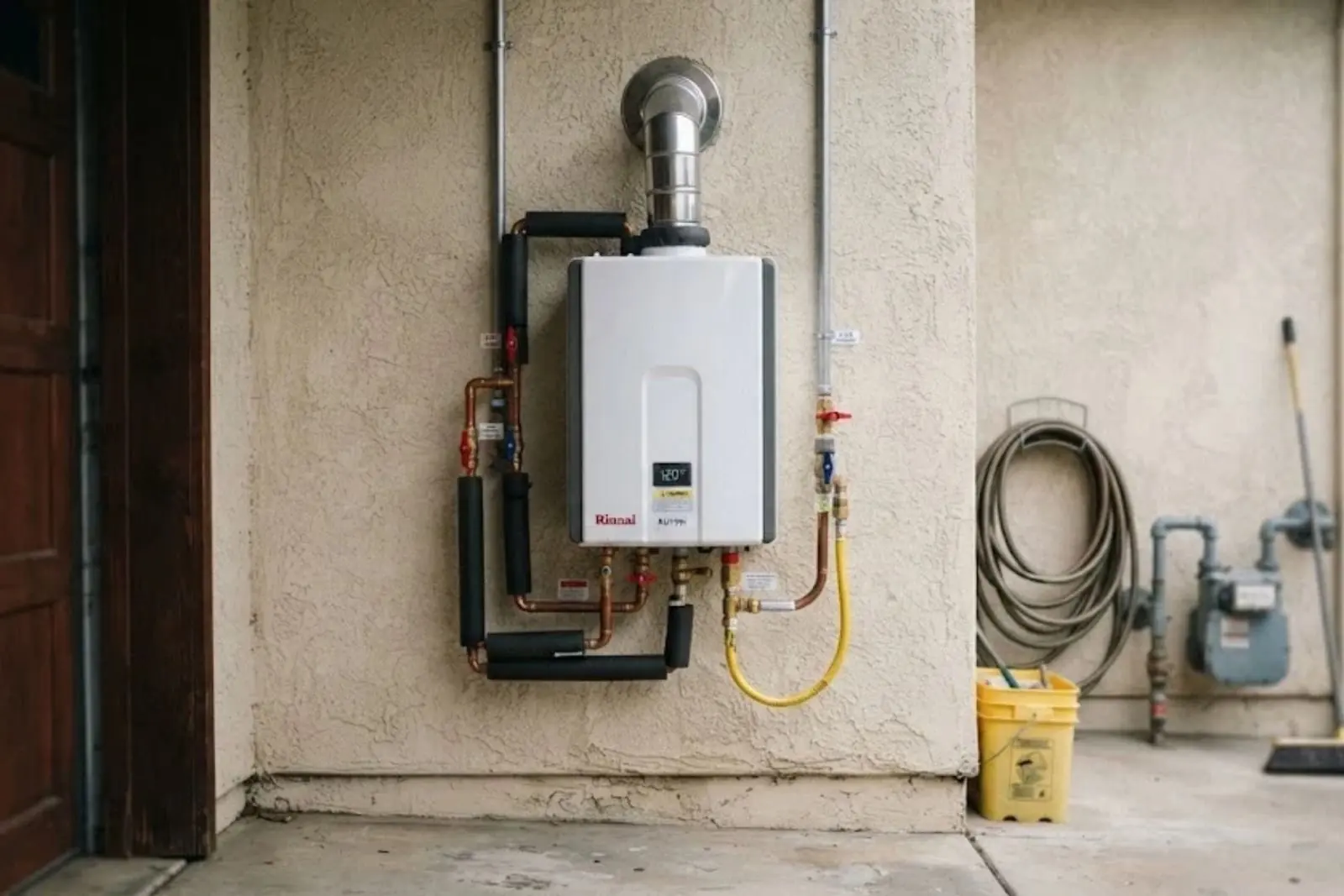
Is tankless worth it with one bathroom?
For a one-bathroom home, a tankless heater can work well. Demand is low and predictable, so a modest unit usually covers it. You also stop heating a tank of water that sits idle while the house is empty.
The catch is installation, not capacity. Gas line size, venting and clearance decide whether a tankless unit fits, and those are often the costs that surprise owners.
If your tank has already failed, price a straight swap too. A plain water heater replacement is the cheaper install in most houses, and tankless wins when you value the space, the endless supply and the longer service life of the unit. Pick on the install you can actually do, not on the brochure.
Three setups for a small home
Small whole-house tankless
A gas or electric unit sized for one bath. Compact and wall-mounted, but it needs the right gas line, vent or electrical capacity.
Compact tank heater
A smaller 30 to 40 gallon tank can cover one bath at lower install cost. Easy swap if the existing spot is already set up.
Point-of-use electric
A small unit near one fixture. Good for a distant sink, not a replacement for a whole-house heater.
Flow rate check: what one bathroom actually needs
| Fixture | California maximum flow | Why it matters |
|---|---|---|
| Showerhead | 1.8 gpm | Biggest single draw in a one-bath home |
| Bathroom faucet | 1.2 gpm | Small, but it runs with the shower if two people use the bath |
| Kitchen faucet | 1.8 gpm | Add this if someone may run a sink while the shower is on |
Maximums come from the 2025 California Green Building Standards Code for new residential fixtures, effective January 1, 2026. Older fixtures can flow more, so measure with a bucket and a watch before you size.
Add the numbers for fixtures that could run at once. A shower plus a kitchen faucet at the code maximums is under 4 gpm. A tankless unit's published rating at your temperature rise should cover that number.
Where tankless falls short
A tankless heater does not remove the wait for hot water at a distant tap. The pipe still has to clear its cold water first. Very low flows can also trigger a minimum-flow shutoff and a cold burst in the shower, which owners sometimes call a cold-water sandwich.
If your hot water already takes a long time to reach the bath, a recirculation setup or a shorter pipe path matters more than the heater type.
Hard water and a tankless heat exchanger
ACWD reports blended hardness for Union City at 120 to 160 ppm, averaging 138 ppm, which works out to about 8 grains per gallon. That is enough to build scale inside a tankless heat exchanger over time, and scale cuts flow and efficiency.
Ask the installer for isolation valves so the unit can be flushed with a descaling solution, and ask how often the manufacturer recommends it. A softener in front is another option, though many one-bath homes just plan on periodic flushing.
Source type: Alameda County Water District 2025 Water Quality Report
Upkeep and what to expect over the years
A tankless unit needs less floor space and has no tank to rust through, but it is not maintenance free. The inlet screen collects debris and the heat exchanger needs flushing on the schedule the maker sets. Ask the installer to show you where the screen and service valves are.
Keep the manufacturer's manual and note the model number on the unit. Those details decide which parts and which flush settings apply when you need service later.
Not sure your gas line can feed one?
Describe your meter, your current heater and where it sits. A plumber can tell you what a tankless swap would need.
What a tankless install needs to check out
- Gas line capacity. Tankless units draw gas fast, and an undersized line starves them. Many older tank setups need the line upsized, and that work is separate from the heater itself.
- Venting. Most units need sealed, rated venting through a wall or roof, with specific clearances.
- Electrical and condensate. Even gas units need power. Condensing models need a drain for acidic condensate.
- Mounting location. A wall with space, service clearance and a path for the vent.
- Shutoffs and service valves. Isolation valves make later flushing possible.
- Seismic and permit items. Ask whether the install needs a permit and how the unit is anchored.
A five-minute sizing check you can do yourself
Count what can run at once
Shower plus a bathroom faucet is the usual peak. Add the kitchen if that happens in your house.
Measure the real flow
Time how long a bucket takes to fill at the shower and note the gallons per minute.
Estimate the temperature rise
That is the gap between your incoming water and the hot temperature you want. Colder incoming water needs more heating power.
Read the rated flow at that rise
Manufacturers publish how many gpm each unit delivers at a given rise. Match the number to your peak.
Add headroom
A unit that barely meets your peak will struggle on a busy morning.
Tankless for a one-bathroom home
Often yes if the gas line, vent and mounting space work out. The hot water supply is steady, and you stop heating an idle tank. The install requirements are where the extra cost comes from.
Add the flow of fixtures that run at once and match it to a unit's rated flow at your temperature rise. A shower and a bathroom faucet at today's code maximums need well under 4 gpm.
It can. Scale builds on the heat exchanger, reduces flow and lowers efficiency. Plan for periodic flushing and ask for isolation valves at install.
Yes. A tankless unit heats water on demand, but the pipe still has to push out cold water first. A recirculation loop or shorter pipe run helps.
Sometimes. The spot needs gas line capacity, vent clearance and room for service access. A plumber can check those on a visit.
Yes, and Fremont uses the same ACWD water, so the hard-water plan applies there too. See our Fremont plumber page.