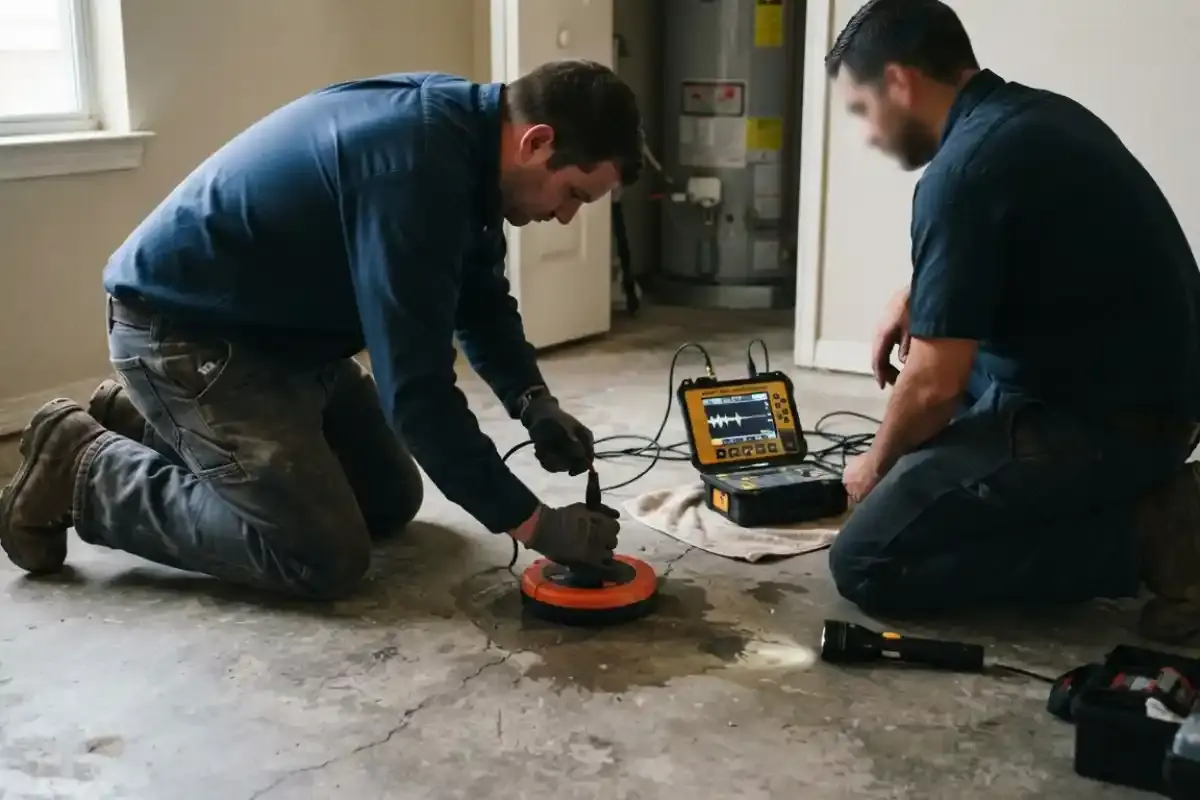
Water Under the Slab Is an Urgent Problem
Call the 24/7 line if the floor is hot underfoot, the meter runs with everything off, or you can hear water that nobody is using. Close the main house valve (ACWD says clockwise) and turn the water heater to pilot or off so it does not heat an empty tank.
Same-day response matters here because a pressurized leak under concrete can wash out the soil beneath the slab and soak flooring, baseboards and drywall from below. The sooner the water is off, the smaller the repair.
How to Tell a Slab Leak From Other Leaks
Slab leaks are easy to confuse with a toilet or irrigation leak. These clues narrow it down.
- Hot spots. A patch of floor warmer than the rest, often along the path of a hot line.
- Hissing at night. Pressurized water makes a faint sound that carries through concrete when the house is quiet.
- Bill climbs, no visible leak. The meter turns with all fixtures off and the overnight shut-off test shows a loss.
- Damp carpet or lifting flooring. Moisture rising from below shows at edges, closets and doorways first.
- Low hot water pressure. A hot line leaking under the floor can weaken flow at fixtures further along.
- Cracks or a wet foundation edge. Water pushing outward sometimes shows at the slab perimeter.
Why Slab Leaks Show Up in Homes of This Era
Many homes built from the 1950s through the 1980s sit on concrete slabs with supply lines running in or under the concrete. Copper was the usual material. Over decades, water chemistry, rubbing against concrete and gravel, and small movements in the slab can wear a pinhole through the wall of the tube.
We cannot tell you from the street whether your home has this layout, but your plans, a walk-through or a quick look at where the water line enters the house will show it. A home with supply lines in the attic or walls has a different set of leak risks.
What the Local Housing Mix Means for You
Many Union City homes date from the 1970s and 1980s, according to Census ACS estimates. That is the era when slab-on-grade houses with supply lines under or in the concrete were common across California. If your house is from those years, ask whether the plumbing was ever replaced, because original lines are now past the half-century mark in many neighborhoods.
Source type: U.S. Census ACS estimates
How a Slab Leak Gets Found and Fixed
Confirm the leak is on the pressurized side
We close fixtures, watch the meter, and isolate hot from cold to see which line is losing water.
Locate it from above
Acoustic equipment, a thermal camera and pressure testing trace the leak to a spot on the floor plan. We mark it before any cutting.
Choose a repair path
Spot repair, reroute or repipe, covered below. We explain what each would mean for your floors and for your next leak.
Open and repair
Concrete is cut or the new line is run, depending on the choice. Pressure is tested before anything is closed up.
Restore and dry out
Cut sections are patched, and wet materials are dried or removed. Flooring work after concrete is usually separate.
Floor warm and the meter running?
That combination deserves a call tonight, not next week. We can talk through whether it fits a slab leak and what to shut off first.
Spot Repair, Reroute or Repipe: Honest Trade-Offs
| Option | Best when | Trade-off |
|---|---|---|
| Spot repair through the slab | One leak, the rest of the line is sound, and the leak is reachable. | Cutting concrete is dusty and noisy. Other weak spots in old copper can leak later. |
| Reroute through walls or attic | The line is old and the slab path is hard to reach. | Walls or ceilings are opened and patched. New line is exposed in the cavity, not buried. |
| Repipe the affected loop or house | Several leaks, or old tubing across the whole home. | Highest cost and most disruption now, with the least risk of repeat slab leaks. |
A second leak within a short time on the same line is usually the sign to stop patching and read the repipe option seriously. See repiping for pipe materials and permits.
What Drives the Cost of a Slab Leak Job
Serving Union City and the Tri-City Area
We take emergency calls from Union City and also work in Fremont, as described on our Fremont emergency plumber page. Water service across the area comes from ACWD, so the meter boundary applies the same way everywhere in the Tri-City area.
What to do before the leak locator arrives
A slab leak wastes water while you wait, so these steps limit damage and help the locator find the line faster.
- Shut off the house valve. ACWD says to turn the house valve clockwise. If water use at the meter stops, the leak is on your side.
- Keep water off the floor. Move rugs and boxes, and keep people off wet slab areas near outlets or appliances.
- Do not cut or drill the slab. The locator finds the line first, so the opening is small and in the right place.
- Note what you see and hear. Warm floor spots, the sound of running water and a spinning meter all help narrow the search.
Slab Leak Questions
Yes. The 24/7 line is answered every night, weekend and holiday. If you suspect a slab leak, close the main house valve and call, and we will tell you what else to turn off while a plumber heads your way.
Not safely. Water under the slab can undermine soil, damage flooring and drive up your bill, and a pinhole rarely stays a pinhole.
Not always. A spot repair needs a small opening over the leak, but rerouting or repiping can avoid the slab altogether.
We combine acoustic listening equipment, thermal imaging and pressure testing. Two methods that agree give a location we trust enough to cut.
Policies differ. Many cover resulting water damage but not the pipe itself, so read your policy and call your insurer before repairs, and keep photos and notes of what we find.
Sometimes. If the line is old and has leaked more than once, repiping often costs less over time. If the pipe is otherwise sound, a spot repair is reasonable.